Case study
Groundwater level measurement for large-scale property project
The challenge
For a large-scale property project in Iceland, there was a need for a reliable and proactive solution to manage the risk of flooding. Several buildings were located in an area with fluctuating groundwater levels, making continuous monitoring and a rapid response crucial.
The requirements were clear:
- Continuous (24/7) measurement of groundwater levels
- Maximum data delay of 15 minutes
- Long-lasting battery operation, without external power supply
- Reliable data transmission, even in remote and underground environments
- Central cloud environment for monitoring, analysis, and reporting
- Automatic alarms via email and SMS at critical levels
- Access to multiple years of historical data and comparison between different measurement points
The solution from Tempro
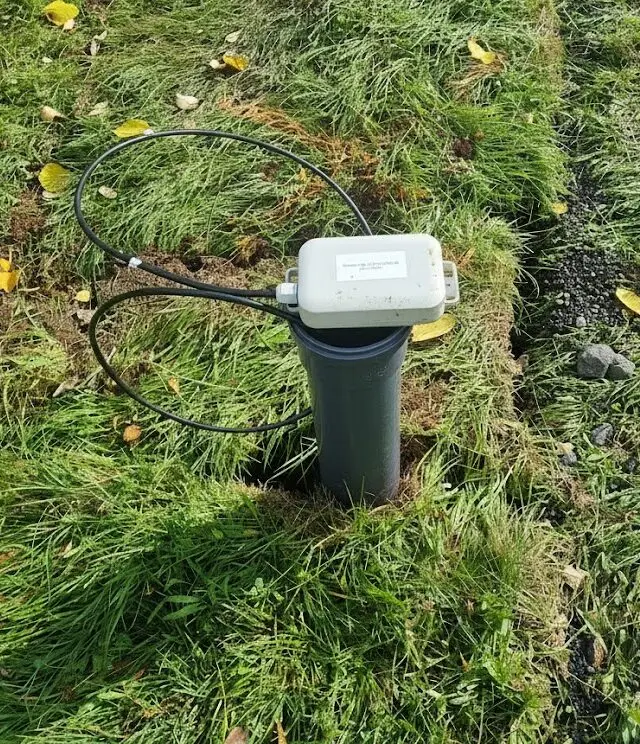
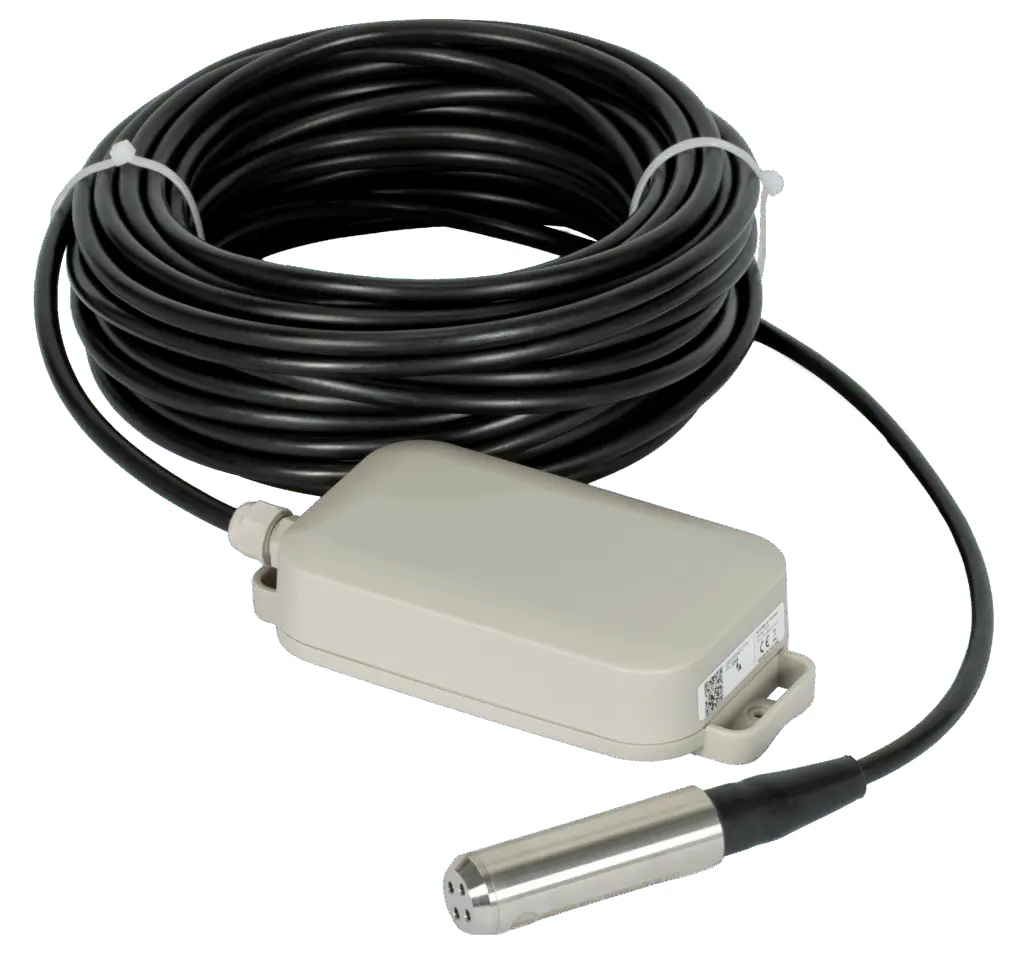
Tempro implemented awireless water level logger based on NB-IoT, equipped with asubmersible pressure sensor. This sensor measures the height of the water column in wells and boreholes with extreme accuracy.
Thanks toNarrowband-IoT (NB-IoT), the measurement data is automatically and energy-efficiently transmitted to a secure cloud platform. This platform allows for central monitoring of all measurement points, visualisation of historical trends, and easy data export for further analysis.
Through a user-friendly mobile application, the device can be configured locally and stored data can be read directly. This creates a fully autonomous and scalable monitoring system, suitable for both temporary and permanent installations.
Applications
The solution can be used for various level and water management applications, including:
- Groundwater level measurement in wells and boreholes
- Water level control in tanks, rivers, lakes, and other bodies of water
- Monitoring of underground water sources and drainage infrastructure
The result
With this solution, the end user has a robust and future-proof monitoring system:
- High reliability:Stable data transmission, even in challenging environmental conditions
- Long autonomy:Minimal maintenance requirements due to low energy consumption
- Cost savings:Low communication costs and use of accurate standard sensors (4–20 mA)
- Rapid intervention:Automatic alarms ensure immediate action in the event of rising groundwater levels
- Long-term insight:Several years of historical data available for analysis and trend comparison
With this case, Tempro demonstrates how smart, wireless monitoring contributes toproactive water management and effective protection of infrastructure, even in the most demanding environments.